
Our World of Warcraft
How The 10 of Us ran a 40-person organization

1:17 AM
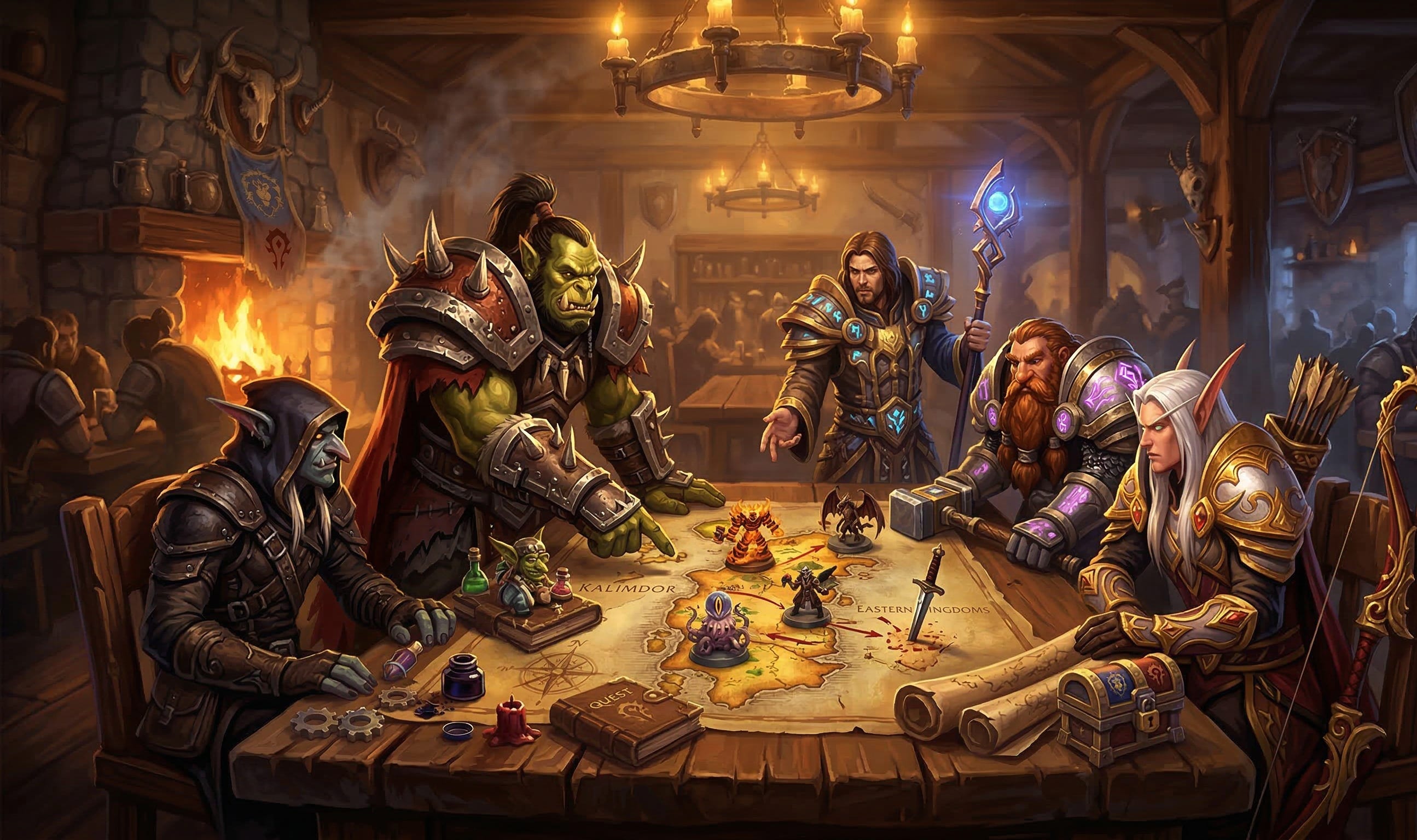
It’s 1:17 AM on a Tuesday night.
You’ve been wiping on Moroes for almost an hour.
The pull timer hits zero and you call it.
Ten voices go quiet on TeamSpeak.
For four seconds, everything works.
The tank moves in.
The healers pre-cast.
The DPS hold back like you’d discussed for twenty minutes.
Then Moroes calls his dinner guests.
Adds spawn from every direction.
Someone breaks crowd control on the wrong target.
A shackle drops.
The off-tank picks up two instead of one.
His health bar collapses in a single global cooldown.
Raid frames turn from green to yellow to red to grey, one after another.
Wipe.
For a few seconds nobody says anything.
Then someone laughs and says something that makes everyone crack.
You don’t remember the joke.
You remember the silence before it.
Ten people breathing, processing, waiting to see if the raid leader is going to call it or go again.
You’re the raid leader.
You’re twenty years old and you have no idea what you’re doing, but these ten people — part of the forty-person guild you somehow ended up leading — showed up on a Tuesday night because you said you were going to clear Karazhan this week.
“One more,” you say.
“Same assignments.
But this time, nobody touches the shackled target.
Nobody.
If you have to stand there and do nothing for three seconds,
you stand there and do nothing.”
You defeat Moroes on the seventh pull. It isn’t clean.
The last healer is out of mana and your best DPS is dead on the floor. But the boss drops, and ten people who’d never been in that room before have a boss-kill to their name.
You didn’t know it then.
But that moment — the wipe, the reset, the adjustment, the success,
was the most honest leadership lesson you’d receive for the next fifteen years.
Not in a university lecture.
Not in a management seminar.
In a ten-person raid in a video game that most people outside your world thought was a waste of time.
This is the story of that game.
And what it did to a generation of us.
The Golden Era
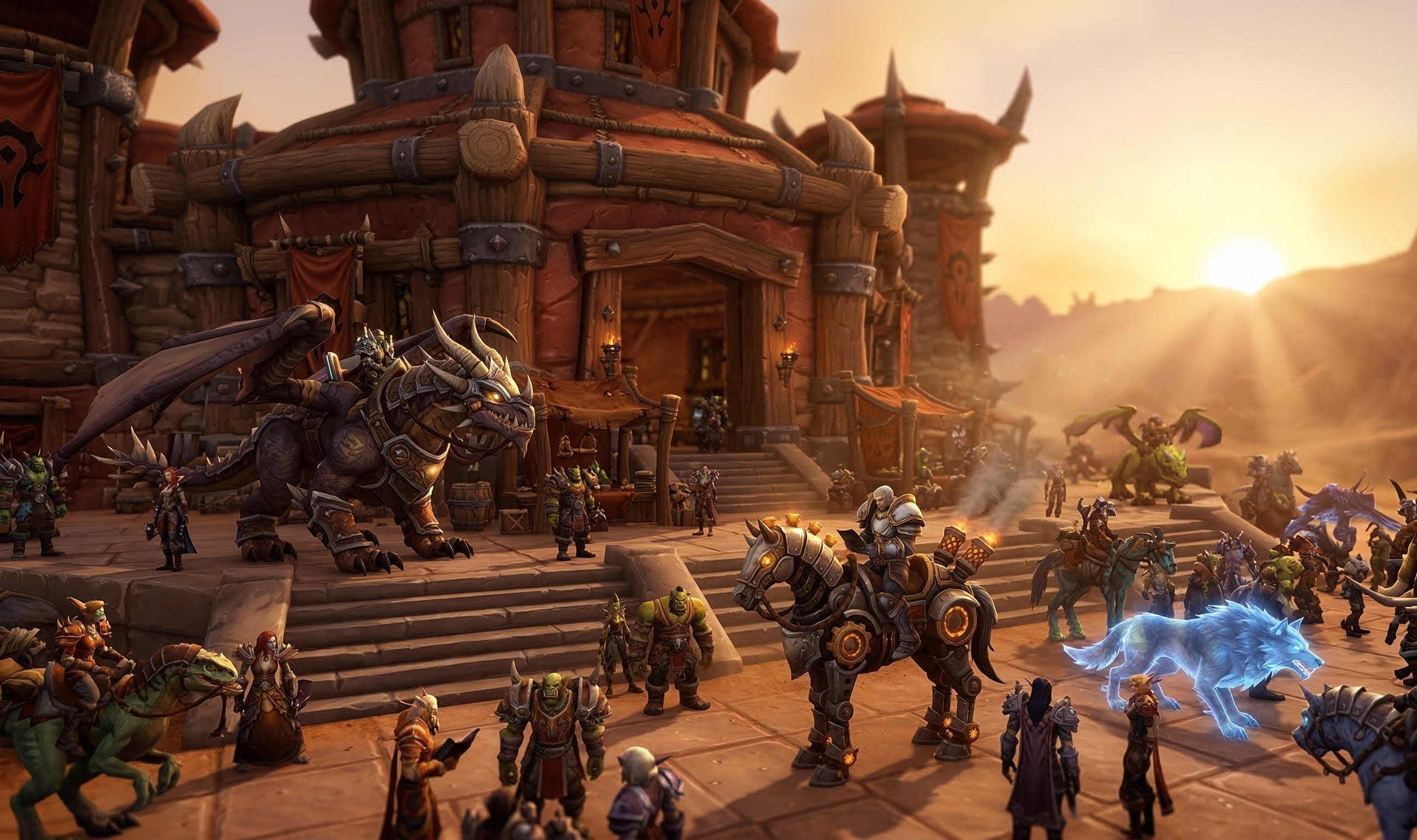
If you played World of Warcraft between 2007 and 2010, you know what I’m about to describe.
If you know, no explanation is necessary. If you don’t, no explanation is sufficient.
But I’ll try.
I entered Azeroth during The Burning Crusade.
Like most people my age, I’d played games before — a lot of games — but nothing prepared me for the fundamental strangeness of a world that kept going when I logged off.
I remember my first evening in Hellfire Peninsula.
Other players streaming past me toward objectives I didn’t understand yet.
The feeling that I was late.
That things were already happening.
That people were already organized.
The world didn’t wait for me.
And that made it feel more real than anything rendered on a screen.
By Wrath of the Lich King, WoW wasn’t a game anymore.
It was the background operating system of my social life.
My college friends — all of us around twenty — talked about WoW the way previous generations probably talked about football.
When we went out, the conversation always drifted back.
Which spec got buffed.
Which boss was overtuned.
Who got the legendary drop.
What the top guild on our server was progressing.
We had opinions about talent trees the way people have opinions about politics. Passionately, loudly, and with absolute certainty that everyone else was wrong.
The game had its own social physics.
Your friends list was a social graph before anyone called it that.
You recognized names in Orgrimmar the way you’d recognize faces in a small town.
That’s the warrior who tanks for the top guild.
That’s the mage who undercuts everyone on the auction house.
That’s the rogue who ganked you in Stranglethorn three months ago.
Server identity was real.
Your reputation traveled with you because there was nowhere to hide.
Raid nights were appointments.
Not suggestions.
Not “I’ll try to make it.”
Appointments.
You told real-life friends you were busy Tuesday and Thursday because twenty-four other people were counting on you to be online, buffed, repaired, and at the summoning stone at 8 PM server time.
Gathering outside Molten Core while the last player rushed to log in.
That wasn’t gameplay.
That was coordination.
Tuesday maintenance was a shared pause.
Everyone complained about it.
Everyone was back online the moment the servers came up.
Patch days were cultural events. You read the notes like legislation.
Every class change was debated, mourned, or celebrated.
Someone always quit in protest. They always came back.
And through all of it: the rivalries.
PvP versus PvE.
Alliance versus Horde.
Your guild versus the one that was always one boss ahead of you.
Arena ratings that defined your identity as precisely as your spec.
Arguments that felt genuinely important because the game gave them stakes.
Your time, your reputation, your place in a hierarchy that everyone on the server could see.
We were twenty and we were completely,
unreservedly consumed by this world.
All we wanted was to talk about it, play it,
and find other people who understood why it mattered.
Those were the days.
The Officer Channel
Somewhere between The Burning Crusade and Mists of Pandaria, I became a guild leader.
Not dramatically. Nobody hands you a title and a speech.
You just start a guild because you want to raid and can’t find one that fits.
You invite a few friends. Recruit a few strangers.
And then one night you’re sitting in the officer channel at midnight, trying to figure out how to tell a well-liked player they’re not good enough for the raid roster.
And you realize: this is management.
It was never a big guild.
A small operation for the early raids — Karazhan, Gruul, Magtheridon.
The skilled players eventually moved to bigger guilds on the server. Sometimes I did too, running with serious progression groups before coming back to rebuild.
That cycle — building, losing talent, rebuilding — is something
I now recognize as the most common pattern in engineering leadership.
I just learned it in Azeroth first.
• • •
Recruitment
Finding people for a raid roster taught me pipeline thinking before I’d ever heard the term.
Forum posts on the official WoW recruitment boards.
A custom guild website with application forms.
Trade chat spam that felt undignified but worked.
Direct whispers to unguilded players I’d seen perform well in dungeons.
Whatever it took to fill the roster.
And the roster always needed filling.
Because WoW guilds leaked players the way startups leak engineers.
Slowly, then suddenly, and always at the worst possible time.
• • •
Operations
Running a raid schedule across players with jobs, classes, time zones, and partners who didn’t understand why Thursday night was non-negotiable — that’s resource allocation.
Twenty-five slots and forty signups on a good week.
Which meant constantly deciding who sat out.
Every decision had consequences.
Sit the wrong person and they stopped signing up.
Run the wrong comp and you wiped for three hours and lost morale.
Loot distribution was governance.
DKP systems, loot council, some hybrid that made nobody happy.
The fundamental tension was always the same:
Reward the most dedicated, or equip the raid for progression?
It’s the same tension between rewarding seniority and investing in high-potential talent.
I’ve seen this exact debate in engineering leadership, dressed in different language but structurally identical.
• • •
Attrition
This was the hardest part. And the most transferable lesson.
Players left.
Sometimes they told you why. Usually they just stopped logging in.
One week they were your best healer. The next week their name was grey on the roster and someone said they’d seen them in another guild.
No exit interview.
No two-week notice.
Just gone.
The damage was never the departure.
It was the cascade.
One person leaving makes others wonder if they should leave too.
Two departures in a week and the officer channel fills with anxiety.
Your job was to absorb the loss, project stability, fill the slot before the next raid, and quietly prevent the bleed from becoming a hemorrhage.
If that sounds exactly like managing engineering attrition — it is.
The context changed. The system didn’t.
• • •
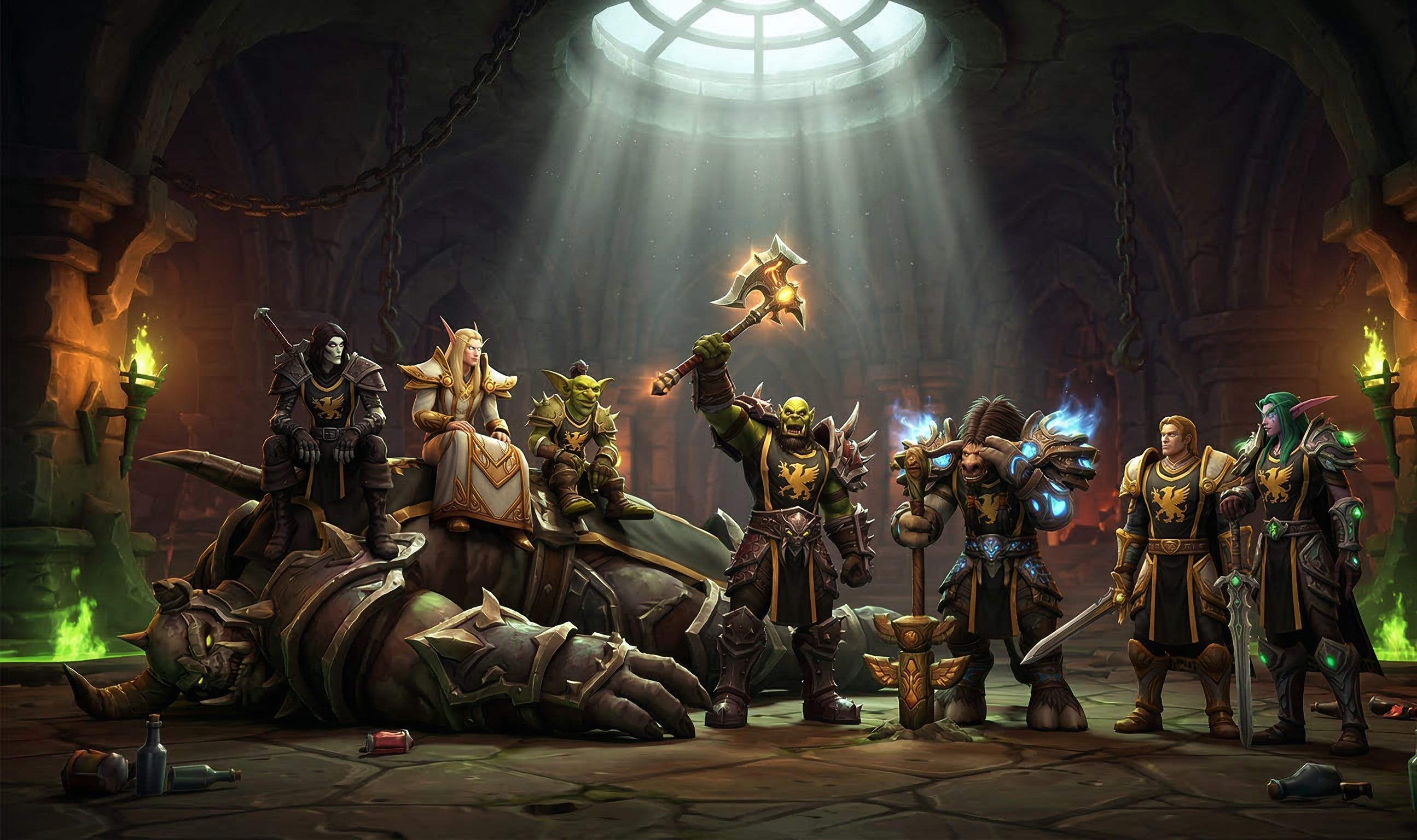
The First Coordination Engine
Nobody called it a coordination platform.
But that’s what it was.
Before Slack channels and Jira boards,
before agile standups and sprint retrospectives,
millions of ordinary people were running dependency graphs
every Tuesday night.
A raid encounter is a dependency graph.
If the tank dies, the entire chain collapses.
If a healer runs out of mana, the survivability timeline compresses.
If a DPS breaks crowd control, a cascade failure propagates through the group.
Every boss fight was a systems problem. And the raid team was a cross-functional unit with specialized roles, shared resources, and a very tight feedback loop.
You either defeated the boss or you ran back from the graveyard and tried again.
Guilds were organizational topologies.
The guild master set direction but couldn’t control execution in real time — that happened at the officer layer.
Class leads functioned as functional leads.
Raid leaders were program managers, coordinating across functions in high-pressure environments with imperfect information.
The org chart was flat, authority was earned, and the only performance metric that mattered was whether the boss died.
The auction house was emergent capitalism.
Supply, demand, speculation, market manipulation, arbitrage — all driven by player behavior with zero central planning.
Players who understood the system outperformed those who just farmed. It was a real economy with real incentive structures, running inside a fantasy world.
Add-ons were open extensibility.
The community built better interfaces than the developer — damage meters, boss timers, healing assignments, threat monitors. Blizzard eventually absorbed the best ideas into the base game.
It was an open API before the industry standardized the concept, producing exactly the dynamic you see in every healthy platform: third-party developers solving problems faster than the platform owner.
And then there was the plague.
In 2005, a bug caused a boss debuff called Corrupted Blood to spread beyond its intended encounter.
Players carried it to capital cities.
Within hours, bodies littered the streets of Ironforge and Orgrimmar.
Players panicked.
Some fled.
Some tried to heal the infected.
Some deliberately spread the disease.
Epidemiologists studied it.
Published, peer-reviewed research — because WoW had accidentally created a population-scale simulation of pandemic behavior. Complete with super-spreaders, quarantine breakers, altruistic healers, and mass panic.
The game’s coordination systems were realistic enough to produce emergent human behavior at scale.
WoW didn’t just entertain a generation.
It taught systematic thinking to millions of people
who didn’t know that’s what they were learning.
And its influence extends far beyond its subscriber numbers.
Every modern MMO, every live-service game, every social platform that uses guilds or clans or squads is building on architecture that WoW popularized.
The people who grew up inside it,
the guild leaders, the raid callers, the auction house speculators, the forum warriors,
carried those patterns into careers that have nothing to do with gaming
and everything to do with the skills the game quietly taught.
What Broke the Magic
The shift was gradual, which made it hard to name while it was happening.
Dailies turned exploration into a checklist. The same quests, the same zones, the same routine, every day, because the incentive structure rewarded consistency over curiosity.
The world that once felt vast and unpredictable began to feel like a job.
But the real structural break was the Looking for Group tool.
And especially Looking for Raid.
Before LFG, running a dungeon required social coordination.
You whispered people, formed a group, traveled to the instance, and relied on the same reputation system that governed everything else. When the tool automated that process, it removed the friction — and with it, the social gravity.
You could now clear endgame content solo-queued with strangers you’d never see again.
Nobody spoke.
Nobody knew each other’s names.
Nobody cared if they ever grouped again.
When convenience replaced coordination,
the thing that made the game special quietly disappeared.
For years, that felt like the end of the story.
The Second Chance
But what if it wasn’t?
World of Warcraft: Midnight launched on March 2, 2026.
It is the eleventh expansion for a twenty-one-year-old game.
By any reasonable measure, it should be coasting toward retirement.
Instead, Midnight shipped with something interesting.
A modernized UI that bakes raid-critical functionality directly into the base game — eliminating the add-on dependency that once made WoW unapproachable.
A combat assistant.
Player housing.
Controller support improvements.
Accessibility features that feel less like quality-of-life patches and more like platform preparation.
Blizzard’s game director has explicitly denied that a console port is in active development. As of late 2025, his position was clear:
If they were building it, they’d say so.
But the platform around him tells a different story.
Microsoft owns Blizzard.
The next-generation Xbox, codenamed Project Helix, is essentially a PC-console hybrid — a machine that runs both Xbox and PC games, with reports suggesting it will support multiple storefronts potentially including Battle.net.
If that’s true, you wouldn’t need a console port at all.
You’d download the PC version.
Use the built-in controller support.
Play on the same servers as everyone else.
The technical barrier that
kept WoW off consoles for two decades could dissolve.
Not through a Blizzard engineering effort,
but through a platform architecture decision at the Xbox level.
The new CEO of Microsoft Gaming — as of February 2026 — had three stated priorities:
Great games,
the return of Xbox,
and the future of play.
What that mandate actually means for the platform is a longer conversation — one I started on Why Xbox Matters.
The question a platform operator asks at that scale is obvious:
Why is one of the most iconic games in our portfolio limited to a single platform?
And the honest answer is: increasingly, there’s no good reason.
There are two paths forward.
Either WoW recreates itself as a true 2.0 — modern engine, rebuilt from the ground up, free of twenty years of accumulated architecture.
Or it expands to new platforms as-is, making the transformation at the platform layer rather than the application layer.
Project Helix makes the second path not just possible but elegant.
Final Fantasy XIV and Elder Scrolls Online proved that MMOs work on console.
They proved the demand exists.
But neither of them is World of Warcraft.
Neither carries the cultural weight, the nostalgia reservoir, or the IP depth that Warcraft has built across three decades.
A console WoW wouldn’t just be another platform.
It would be a cultural event.
And here’s the question that matters more than any technical roadmap:
What would it mean to give a new generation the experience we had?
Not the mechanics — those have been iterated on by a dozen games since.
The social fabric.
The sense that logging in meant entering a world where your presence was expected and your absence was noticed.
If even a fraction of that can be recreated for players who never had it — on whatever platform, through whatever path — then it’s worth doing.
Because somewhere out there is a twenty-year-old who hasn’t felt yet what we felt at 1:17 AM on a Tuesday night.
Logging Off
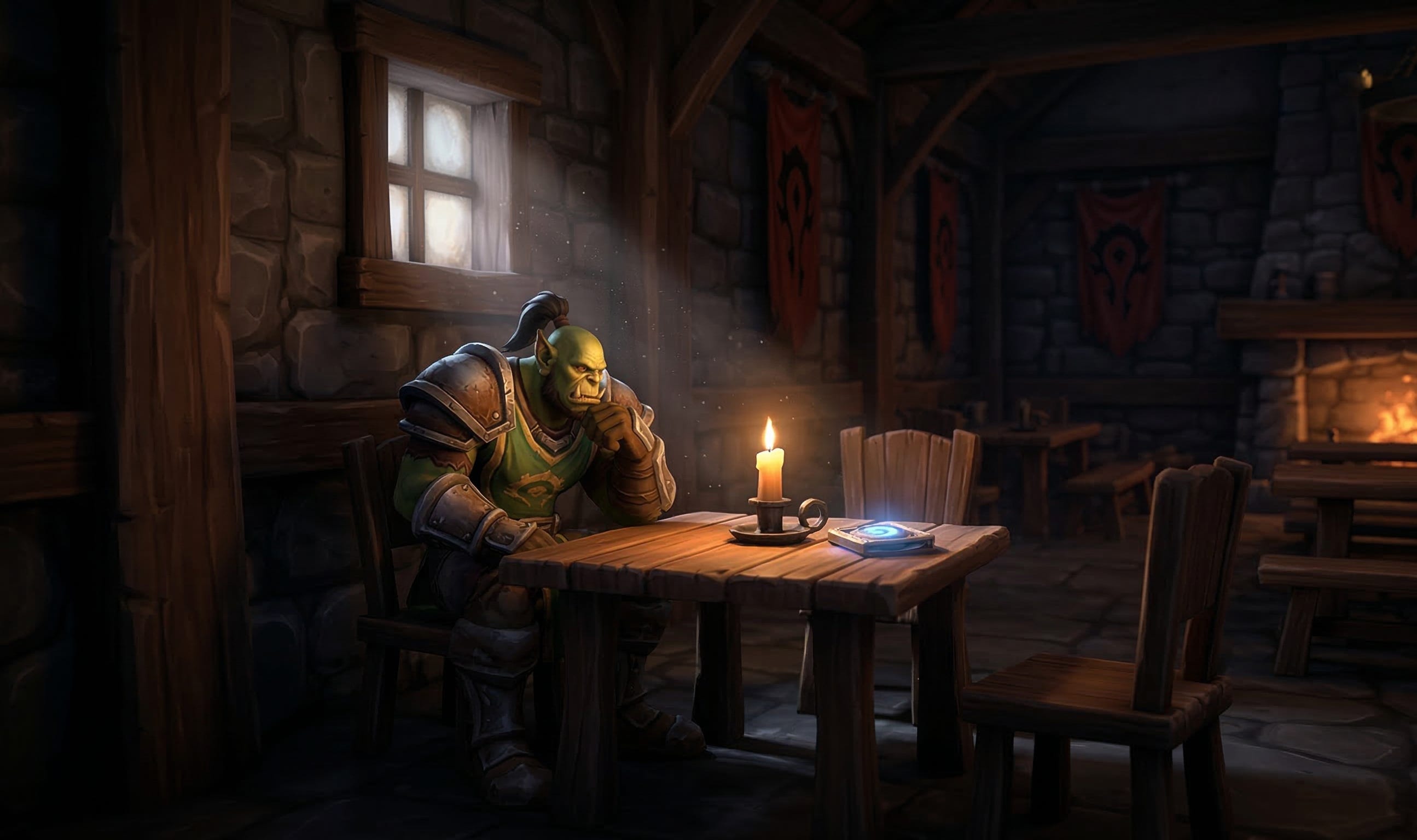
The end didn’t come all at once.
There was no dramatic moment where I decided to quit World of Warcraft.
There were just longer gaps between logins.
A week without playing became two. Then a month.
Each time I came back, there were fewer names on the friends list.
The ones still there had timestamps.
“Last online 47 days ago.”
Guild chat that once scrolled faster than I could read was quiet. Someone would log in, say hi to nobody in particular, and log out twenty minutes later.
Real life was part of it.
College finished.
Careers started.
Relationships demanded time that couldn’t be negotiated around a raid schedule.
But it wasn’t just that.
The world we’d loved had shifted beneath us.
We knew it was time to go.
We just didn’t want to admit it.
Because admitting it meant the era was over.
But here’s what I’ve learned in the fifteen years since.
None of it was wasted.
The coordination instincts didn’t vanish when I unsubscribed.
The recruitment muscles I built filling raid rosters are the same ones I use hiring engineers today.
The conflict resolution I practiced in officer chat — where I had no authority, no HR department, and no leverage except the shared desire to defeat a boss — prepared me for the hardest conversations I’ve had in professional leadership.
The attrition management.
The morale calibration.
The ability to stand in front of forty people after a bad night and say “one more pull” with enough conviction that they believed it.
All of that came from Azeroth.
Whether or not WoW comes to console.
Whether or not I ever log in again.
The world we built together was real.
The friendships were real.
The leadership was real.
And if a new generation of players gets to discover, on a Tuesday night, that ten strangers can become a team and a failed boss pull can become the best lesson of their lives.
Then the story isn’t over.
It’s just a new expansion.
🎮 🟢 🎮 🔵 🎮 🔴 🎮
If this resonated with you, subscribe to The Platform Layer for weekly essays on gaming platforms through a systems lens.
Petros Bountis is a Director of Engineering who applies infrastructure thinking to games and platforms. He writes about the strategy, ecosystem dynamics and leadership patterns that shape how we play.