
The Xbox That Could Have Been
A System Design View of a Platform in Transition


For years, Xbox has been one of the most misunderstood businesses inside Microsoft.
Gamers see a console.
Analysts see a subscription service.
Executives see a long-term cloud play.
But if you zoom out — really zoom out — you start to see something else entirely:
a platform in the middle of a structural transformation, trying to evolve from a plastic box into a distributed entertainment ecosystem.
And that’s what makes Xbox such a fascinating case study.
It’s not just about games.
It’s about architecture, incentives, infrastructure, and leadership clarity.
Xbox matters now because it’s one of the few large-scale attempts to transition a consumer hardware business into a cloud-native platform in public.
Most companies either succeed quietly or fail privately. Xbox is doing neither.
It’s evolving in real time, under scrutiny, with legacy expectations attached.
That makes it one of the most instructive case studies in platform leadership available today.
Engaging with the Xbox community every day forces you to see the pattern:
The vision is ambitious, the components are there,
but the sequencing and communication have been inconsistent.
And that gap — between what Xbox could be and what it is — is where the leadership lessons live.
The Shift: From Plastic Console to Distributed Platform
For two decades, “Xbox” meant hardware.
A console under your TV.
A controller in your hand.
A closed ecosystem with clear boundaries.
But Microsoft doesn’t think in boxes anymore.
They think in platforms, compute fabrics, and endpoints.
The real strategic shift began when Microsoft realized something fundamental:
The future of gaming isn’t tied to a single device.
It’s tied to identity, compute, and distribution.
If you can abstract those layers away from hardware, you can turn Xbox into something far more powerful than a console.
In this future, Xbox becomes a global compute fabric for interactive entertainment.
A cross-device identity layer.
A content distribution network.
A developer platform.
A commerce engine.
This is the same playbook that turned Windows into Azure, and Office into Microsoft 365.
Xbox is simply the last frontier.
What makes Xbox paradoxically compelling — why it dominates gaming discourse despite losing by every traditional metric — is something I explored in Why Xbox Matters.
This piece goes deeper: into the architecture of what that platform could have been, and the leadership decisions that kept it from getting there.
But this transition introduces a deep structural tension — one that explains much of Xbox’s visible inconsistency.
Xbox is trying to be three things at once:
a premium console brand
a mass-market subscription service
a cloud-native platform
Each of these pulls the system in a different direction.
Consoles want scarcity and exclusivity.
Subscriptions want abundance.
Platforms want neutrality and scale.
You cannot optimize all three simultaneously. Choosing one undermines the others.
So Xbox held all three in tension without resolving the hierarchy.
And the inconsistency the market sees is not confusion.
It is the structural cost of an unresolved architecture.
And that is not a messaging problem — it’s an architectural one.
Any World of Warcraft player knows this instinctively.
Buff a class for raids, you break it in PvP.
Nerf a spec for arena balance, it becomes unviable in dungeons.
Thirty specs, three content modes, one patch — the system cannot serve all players simultaneously.
Xbox’s three-way tension is the same structural problem at platform scale.

The Endpoints of the Future Xbox Ecosystem
A true platform doesn’t live in one place. It lives everywhere.
If Xbox completes its transition, the ecosystem will revolve around a constellation of endpoints. Each one a surface where the Xbox runtime can operate.
The console remains the premium node, but it’s no longer the center of gravity.
PC becomes a hybrid environment.
Mobile becomes the mass-market access point.
Smart TVs become the zero-install Trojan horse.
The browser becomes the universal fallback.
And then there are the emerging endpoints: handhelds, VR/AR devices, automotive systems, hotel entertainment, public gaming kiosks.
Anywhere a screen exists, Xbox can exist.
“This is an Xbox” campaign was quietly regressed for now.
Xbox shall become ambient.
Not a device, a presence.
The Core Elements of the System
To make this work, Xbox needs a coherent architecture. Not a collection of features, but a layered system where each component reinforces the others.
• • •
⦿ Identity as the Anchor
The Gamertag is more than a username.
It’s the persistent identity layer that carries achievements, cloud saves, social graphs, and progression across every endpoint. It’s the glue that makes Xbox feel like a single ecosystem rather than a set of disconnected devices.
• • •
⦿ Distribution as the Engine
Game Pass, cloud streaming, local downloads, cross-buy entitlements.
These form the distribution layer. This is where the economics live. This is how content flows. This is how Xbox scales beyond hardware.
• • •
⦿ Compute as the Backbone
Local hardware still matters.
The Series X is a monster of a machine. But the future is hybrid: local rendering augmented by cloud compute, edge nodes reducing latency, and Azure GPU clusters doing the heavy lifting for devices that can’t.
• • •
⦿ Developer Tools as the Multiplier
A unified SDK, cross-device input abstraction, cloud-native tools, and telemetry.
This is how you attract developers. This is how you build an ecosystem that compounds.
• • •
⦿ Commerce as the Fuel
Subscriptions, in-game purchases, cross-platform marketplaces.
This is the monetization layer that keeps the system alive.
• • •
When these layers align,
Xbox stops being a console and becomes a platform.But alignment requires infrastructure.
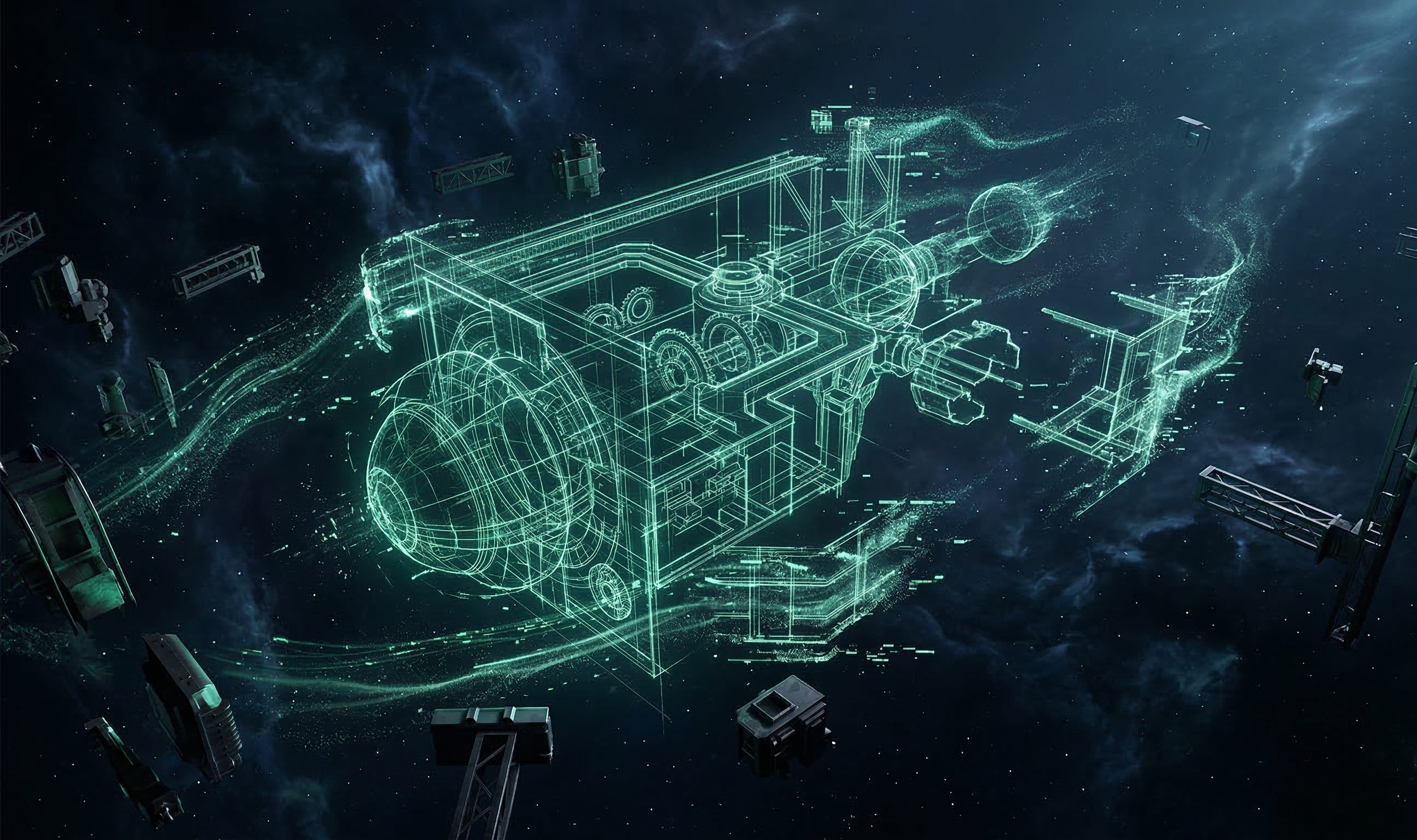
The Infrastructure & Network Reality
This is the part most gamers never see:
The invisible scaffolding that makes the experience feel seamless.
To deliver cloud-first gaming at scale, Microsoft needs edge compute expansion in Europe, LATAM, Africa, and Southeast Asia.
It needs low-latency ISP partnerships to reduce hops and stabilize streaming.
It needs local caching for game assets, hybrid rendering pipelines that blend local and cloud compute, and Xbox OS integrations directly into TVs and third-party hardware.
This is the hard part.
This is the expensive part.
This is what determines the ceiling.
When infrastructure gaps exist, gamers feel it directly:
Dropped sessions, inconsistent latency, regional catalog limitations, and the frustrating sense that cloud gaming “works sometimes.”
These aren’t product failures.
They’re infrastructure deficits manifesting as trust erosion.
And that infrastructure reality is what determines whether
Xbox becomes a global platform or remains a Western-centric console business.

What This Means for the Everyday Gamer
For the average player, this shift is transformative.
The console becomes optional — not obsolete, but optional.
You can play on your phone, your TV, your laptop, your handheld, your browser.
Your saves follow you.
Your friends follow you.
Your library follows you.
No downloads. No patches.
No storage anxiety. No friction.Xbox Play Anywhere.
For competitive players, local hardware still matters.
Latency still matters.
Fidelity still matters.
Offline play still matters.
The console becomes the premium node.
The best version of Xbox.Not the only version.
And for global markets, this is the unlock.
A $500 console is a luxury. Imagine a $1000+ one.
A subscription on a TV is accessible.
This is how Xbox grows where consoles never penetrated.
The Strategic Mistakes Microsoft Made

Now we arrive at the part where the leadership lessons crystallize.
Because Xbox didn’t fail due to lack of vision.
It struggled because of decision sequencing.
Most of Xbox’s missteps weren’t wrong decisions.
They were right decisions made in the wrong order.
Had Xbox sequenced content, narrative, and infrastructure differently, the platform conversation today would look very different.
• • •
⦿ Vision Without Narrative
The Xbox One DRM fiasco wasn’t a bad idea.
It was a badly communicated idea delivered at the wrong moment.
Microsoft tried to explain an all-digital, always-connected future to an audience that still thought in terms of physical discs and ownership.
The vision was years ahead of the narrative infrastructure needed to support it.
• • •
⦿ Underestimating Exclusives
Game Pass is brilliant distribution, but content drives platforms.
For too long, Xbox treated first-party studios as nice-to-haves rather than platform necessities.
A platform without flagship products becomes a commodity.
The Bethesda and Activision acquisitions — nearly $80 billion combined — came late.
They were a correction, not a strategy.
And buried inside that $69 billion Activision acquisition sits the most powerful social coordination engine ever built — World of Warcraft.
A franchise that taught millions of gamers how to run 40-person organizations, manage economies, and coordinate across time zones.
Console WoW is the thing Microsoft has never done. Twenty years of inaction.
“To get something you never had,
you have to do something you never did.”
WoW on console could be Microsoft’s The Last of Us moment.
The franchise-defining IP sitting in the portfolio, unplayed.
I explored what makes WoW that kind of hidden weapon in Our World of Warcraft.
• • •
⦿ Infrastructure Before Desire
Microsoft built cloud infrastructure before building a must-have content ecosystem. They assumed “if you build it, they will come.”
But platforms don’t work that way.
Content creates desire.
Desire justifies infrastructure.
Not the reverse.
• • •
⦿ Hardware Fragmentation
The Series S/X split was meant to offer choice. Instead, it created confusion.
Developers had to optimize for two spec targets.
Marketing became muddled. Players didn’t understand the value proposition.
Optionality is good when it adds value.
Fragmentation is not.
• • •
⦿ Reactive Communication
Xbox often explains decisions after backlash rather than setting context before making moves.
Leaders must establish the “why” before announcing the “what.”
Reactive communication looks defensive.
Proactive communication looks confident.
• • •
⦿ Lack of Executive Air Cover
For years, Xbox lacked consistent top-level sponsorship within Microsoft.
Without executive protection, a division cannot win long-term battles.
It gets starved of resources, second-guessed, and treated as optional.
Phil Spencer’s eventual elevation helped stabilize the division, but the delay cost years of momentum.
And in early 2026, that hard-won air cover vanished entirely.
Spencer retired, Bond departed, and the division passed to a leader from outside gaming.
The lesson isn’t just about earning executive protection.
It’s about what happens to a platform when it disappears.
• • •
These aren’t just Xbox problems.
They’re leadership antipatterns that show up in every platform transition.
From Windows to Azure, from on-prem to SaaS, from hardware to services.
The lessons generalize.
The Leadership Lessons That Tie It All Together
This is where the story transcends gaming perspective and becomes something bigger.
• • •
⦿ Vision must be paired with narrative
Strategy without storytelling is invisible.
You can have the right answer and still lose if you can’t explain it in terms people understand and care about.
• • •
⦿ Platforms require patience, consistency, and talent density
Platforms are marathons, not sprints.
You need executive patience, consistent investment, and dense clusters of world-class talent. One missing ingredient kills the others.
• • •
⦿ You win by owning the edges, not the core
The real competition isn’t PlayStation.
As Satya Nadella has noted, it’s attention, time, and friction.
Xbox wins by being where players already are — as Phil Spencer consistently argued— not by forcing them to come to Xbox.
• • •
⦿ Build desire before infrastructure
Demand creates justification for investment.
Infrastructure without demand is waste.
The sequence matters:
Content → Desire → Scale → Infrastructure
• • •
⦿ Clarity beats optionality
Too many choices create paralysis.
Gamers don’t want endless SKUs. They want a clear path:
“This is for you if you want X. That is for you if you want Y.”
Simplicity scales better than complexity.
• • •
⦿ Hardware is a node, not an identity
Xbox isn’t a console company pretending to be a platform.
It’s a platform company that happens to make great consoles.
That mental shift changes everything.
Strategy, marketing, incentives, and success metrics.
• • •
The Organism Xbox Is Trying to Become
Xbox isn’t trying to win the console wars.
It’s trying to transcend them.
The goal is not to sell more plastic boxes than Sony.
The goal is to become the distributed compute layer for interactive entertainment.
A runtime that exists wherever screens exist.
A platform that makes gaming ambient, accessible, and persistent.
This is a harder problem than making a great console.
It requires infrastructure investment that won’t pay off for years.
It requires organizational alignment across Azure, Windows, Studios, and Game Pass.
It requires narrative clarity that competitors will exploit as weakness.
It requires patience in a culture that rewards quarterly results.
At GDC 2026, the architectural vision described in this essay began to materialize:
Project Helix as the next-generation hybrid console, Xbox Mode as a unified gaming layer arriving on Windows, and a development path that finally treats console and PC as one surface.
The blueprint is clearer than it has ever been.
The question is whether new CEO Asha Sharma — from outside gaming, in the middle of a generational transition — has the patience and the instinct to see it through.
Xbox is attempting something genuinely hard:
Rebuilding the aircraft mid-flight,
rerouting to a destination passengers didn’t know they were heading toward,
and doing it all while competitors point at the turbulence and call it failure.
And that’s the real lesson.
Strategy is not enough.
Infrastructure is not enough.
Narrative is not enough.You need all three.
Aligned, sequenced, and communicated with clarity.
Xbox’s struggle isn’t a story of failure.
It’s a story of incomplete transformation.
The vision is sound.
The components exist.
The talent is there.
But the sequencing fractured the execution, and the narrative never caught up to the strategy.
For leaders watching this unfold, the lesson is clear:
When you’re evolving a system in public,
The architecture of your communication matters
as much as the architecture of your platform.
You’re not just building the future.
You’re explaining why it’s worth believing in.
🎮 🟢 🎮 🔵 🎮 🔴 🎮
If this resonated with you, subscribe to The Platform Layer for weekly essays on gaming platforms through a systems lens.
Petros Bountis is a Director of Engineering who applies infrastructure thinking to games and platforms. He writes about the strategy, ecosystem dynamics and leadership patterns that shape how we play.